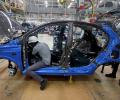
While sales of compact cars, including models such as Swift, Celerio, Ignis, Baleno and Dzire declined, sales of utility vehicles, including Vitara Brezza, S-Cross and Ertiga, increased 26.3 per cent to 19,177 units as compared to 15,178 in the year-ago month.
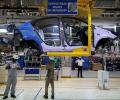
Availability of jobs at India's auto companies has shrunk significantly over the last two years, as the industry goes through one of its worst slowdowns. More than 60 per cent of the total workforce fell by 24 per cent in 2019-20, against 2017-18.

Presenting the Narendra Modi government's maiden Rail Budget, Railway Minister Sadananda Gowda announced setting up of logistic parks and private freight terminals on PPP model.

The first leg of the 35-day festive period, which ended with Dussehra, failed to bring any cheer for auto companies. While makers of passenger vehicles struggled to meet demand due to the persistent shortage of semiconductors, a recovery in demand remained elusive for two-wheeler manufacturers despite offers and schemes. The overall season, which ends two days after Diwali, is unlikely to bring any turnaround in either the supply or the demand scenario, said dealers and officials at auto companies.

Renault says that one of the reasons why its sales look muted when compared to its peers is its limited reach.

The investment will be made through a joint venture with Toshiba and Denso. The battery is the most expensive single part of an EV.
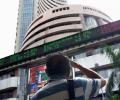
The BSE Mid-cap index gained 1.1% while the Small-cap index surged 1.3%, outperforming the benchmark indices

The auto industry has had a mixed month. The build up to Dhanteras and Diwali was good but the demand tapered off subsequently.


M&M also showcased its new format next generation 'dealership of future' designed by Pininfarina.

Pawan Munjal, chairman and managing director of Hero MotoCorp, the country's biggest two-wheeler maker, leads the pack among automobile CEOs.

The number of participating automakers has fallen from 50 in 2018 to 30 this year. The count of exhibitors, including technology companies, has come down from 119 to 112. And showstopper luxury and supercar brands, including Toyota, Jeep, Lamborghini, Porsche, and Volvo will be missing. Similarly, the commercial vehicle makers also gave the show a miss -- a prolonged economic slowdown has dented their fortunes and near chances of any recovery.

Falling incomes and longer winter to translate into lower demand for at least some months.

Besides their country of origin, General Motors, Ford Motor and Harley-Davidson have another trait in common: all three have failed in India, the world's fifth largest automobile market. All three of them took a tough call to de-prioritise India as a market amid disruption from heightened regulations and sharper focus on capital allocation by the parent.

Maruti Suzuki, Hyundai, Mahindra and Toyota reported low single-digit sales growth for the month owing to weak market sentiment

The total dividend income for seven firms grows 25%.

Ajit Mishra, vice president, Research, Religare Broking, answers your queries

The industry needs stimuli to help revive consumer demand and conversions.

There is also lack of mandate from the government on adoption of electric mobility after ambitious talks of moving all new automobile sales to electric by 2030
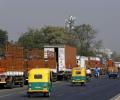
The industry said if the policy was announced, it would have taken 28 million vehicles bought before March 2005 off the road.

Maruti is now at a market share of 50.4%, up from 47.3% last year. In China, the world's biggest market, Volkswagen is the largest, with a share of 17%. In America, the second biggest, GM is leader with 18%. One exception is South Korea, where Hyundai has a market share in excess of 60%.

On Wednesday, FIIs sold shares worth Rs 1,573 crore.
Among the stocks that have seen the largest cut by MFs, the DVR shares (shares with differential voting rights) of Tata Motors have seen a cut of 243 basis points (bps) in MFs' stake.

Bajaj Auto fears adverse impact on its exclusive loan deal with Bajaj Finance

M&M also saw its domestic passenger vehicle sales grow by 1 per cent, while Toyota Kirloskar Motor witnessed a decline in its PV sales.

The Sensex ended 229 points down at 27,602 and the Nifty ended down 63 points at 8,293.

Premiumisation, improving demand aid realisation growth at most large firms
Domestic passenger vehicle sales declined 0.84 per cent to 2,63,773 units in November from 2,66,000 units in the year-ago period. Motorcycle sales, too, declined 14.87 per cent to 8,93,538 units. Vehicle sales across categories registered a decline of 12.05 per cent to 17,92,415 units from 20,38,007 units in November 2018.

While the share of diesel vehicles sales in the overall passenger car industry has already fallen sharply, sales of CNG vehicles have shown a compound annual growth rate of 15.5 per cent over the past five years.

Car sales likely to touch record 3-mn mark by the end of March.

December is a month of high retail sales for cars, as companies and dealers push stocks to clear inventories
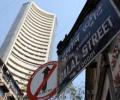
Markets snapped their 8-day winning streak.
In a circular dated May 20, Sebi had directed the listed companies to evaluate the impact of Covid-19 on their capital and financial resources, profitability, liquidity position, assets, and ability to service debt. Instead, companies have spoken about the number of plants, warehouses and distribution centres that have resumed operations; work-from-home and safety measures undertaken for employees; and the labour shortage they are facing.

Satyam's employees had to undergo mental trauma, job uncertainty and financial problems, after many were forced to leave.

Private lenders HDFC Bank and ICICI Bank were the top gainers along with index heavyweights

Since April, India has seen multiple strains of the coronanavirus sweep the nation, upending life and businesses alike. Out-of-home retail and discretionary categories such as durables, auto, fashion, lifestyle, hospitality, food services, travel, and tourism have been the worst-hit as Covid cases remain high, leaving state governments with no option but to curtail mobility and economic activity.

Top losers are Sun Pharma, Bajaj Auto, L&T, ITC, Hero Moto.

The Hinduja Group, Mukesh Ambani, Murugappa, and the Adani groups were the other gainers in the Modi regime, while Naveen Jindal and Sun Pharma groups saw the most erosion in their m-cap in the last five years, reports Krishna Kant.

When it comes to key hands-on management positions, India Inc is still largely run by men.

The Sensex closed the day at 27,490, higher by 479 points and the Nifty ended at 8331.95, up 150.45 points.
